Teppanyaki Meets Tiki Bar
Inside Hello Hibachi
Hello Hibachi runs as two concepts stacked into one address – a teppanyaki restaurant built around tabletop grill cooking, and a tiki bar built around tropical cocktail culture. Most restaurants pick one identity. Hello Hibachi was built to hold both at once.That double identity is right there in the name, and it’s not a marketing flourish – the concept is structured so that neither half is treated as the main event with the other bolted on for variety.
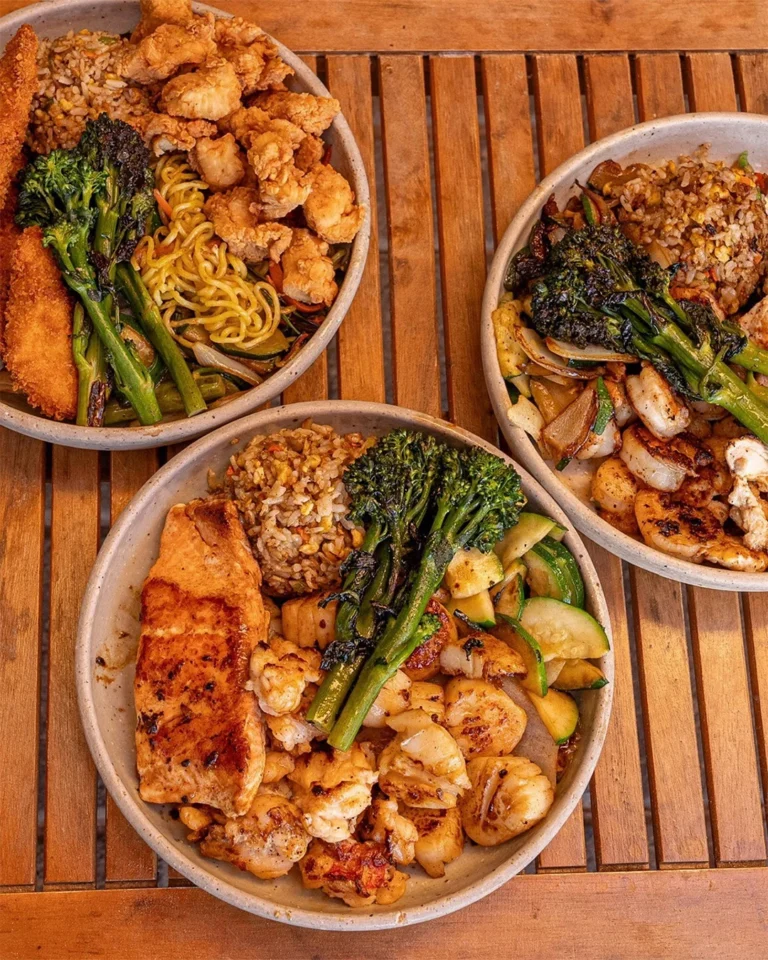
A tabletop grill changes the entire shape of a meal – the cooking happens in front of the table instead of behind a kitchen door, and the format earned Hello Hibachi a Michelin Bib Gourmand, recognition reserved for food that delivers real quality without needing fine-dining pricing to justify it.
That kind of recognition is specifically about value matched to execution – it isn’t handed out for spectacle alone. A tabletop grill can easily become theater without substance behind it; the Bib Gourmand distinction is Michelin’s way of confirming the food itself holds up once the novelty of watching it cook wears off.
Why a Michelin Bib Gourmand Matters Here
A Michelin Bib Gourmand restaurant designation isn’t about tablecloths or tasting menus – it’s Michelin’s way of flagging a place that’s genuinely worth the trip at an honest price. For a teppanyaki concept, that’s recognition for execution at the grill itself, not for the room around it.
The Tiki Bar Side
A tiki bar restaurant built onto a teppanyaki concept could easily feel like an afterthought. At Hello Hibachi, it reads as the other half of the same idea – a hibachi and tiki concept where the bar program gets the same attention as the grill, not treated as a waiting-area distraction.
A tiki bar lives or dies on whether its drinks feel considered or just themed – a few tropical garnishes thrown on a standard well drink doesn’t earn the name. Pairing that bar program directly with a Bib Gourmand kitchen raises the bar for what the drinks have to deliver, since they’re sitting next to food that’s already been judged and recognized on its own merits.
One Name, Two Reasons to Show Up
Some guests come for the tabletop grill theater. Others come for the tiki bar. Hello Hibachi doesn’t ask anyone to choose – both halves of the name describe a real, fully built-out half of the experience.
Part of a Larger Portfolio
Hello Hibachi isn’t operating in isolation – it’s one concept inside a ten-venue group built around giving every room its own identity rather than repeating a single formula. That context matters: a group willing to commit fully to a hybrid idea like teppanyaki-and-tiki in one address is the same group willing to build a raw bar with nothing else competing for attention on the menu, or a cantina built entirely around mezcal. Hello Hibachi’s double identity fits a pattern, even if the combination itself is unusual.
A Concept That Earns Its Double Name
Plenty of restaurants bolt a themed bar onto an existing menu just to round things out. Hello Hibachi’s name works because neither half is the add-on – the teppanyaki and the tiki bar were both built to stand on their own, which is exactly what makes the combination work.
Watch the grill, then order from the tiki side. Visit Hello Hibachi and see why both halves of the name earned their place.